Two ways to get bitcoin
- Buy it. You pay today’s price on an exchange or through a fund, and you own the bitcoin straight away. What you pay depends only on the market price that day.
- Produce it. A mining machine works for the Bitcoin network and is paid in new bitcoin. You pay for the machine once and for its electricity every month. You receive bitcoin day by day instead of all at once.
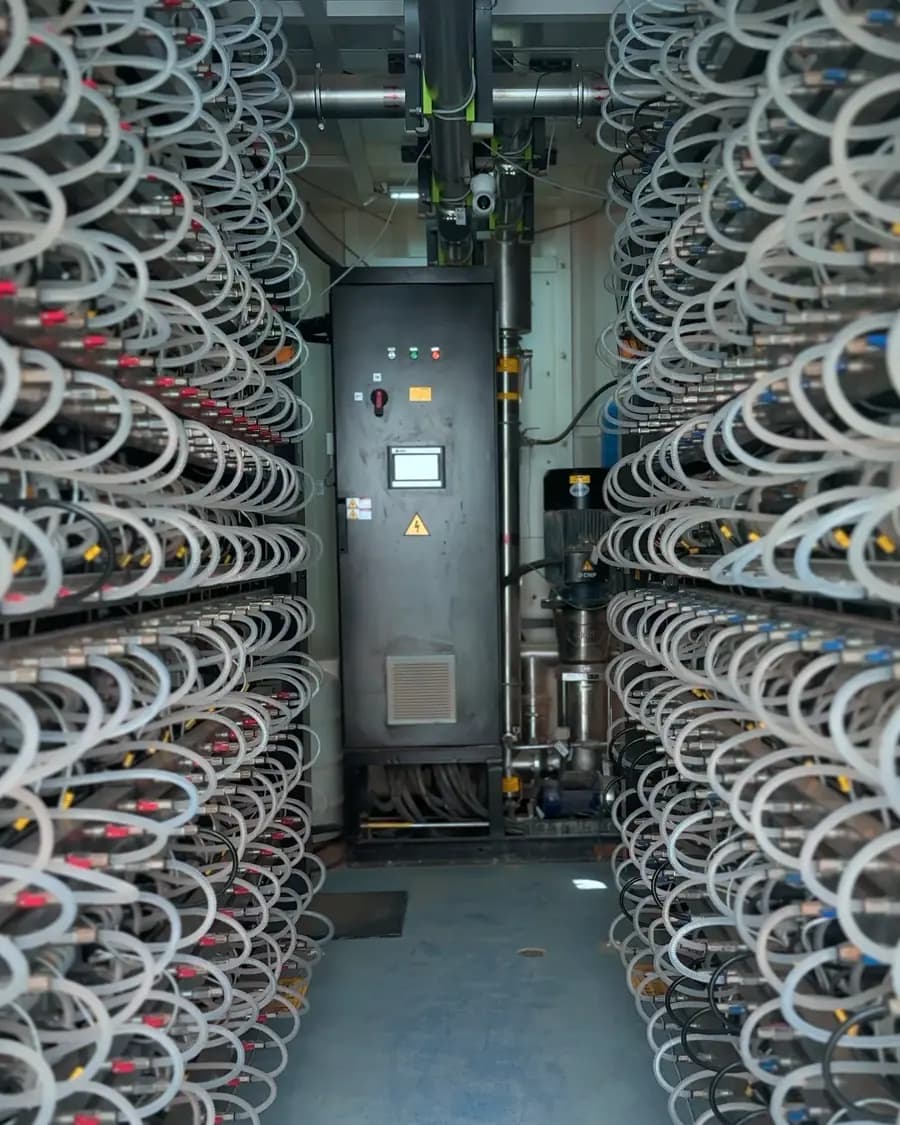
Producing does not need a machine at home. You can own a machine that runs in a hosting centre, own a share of machines someone else runs, or rent mining power for a few days. Three ways to start mining compares them.
Today’s price and what mining earns
The first figure is the price you pay to buy one bitcoin. The second, the hashpriceHashpriceWhat 1 TH/s of mining earns in a day, before power. Moves with the Bitcoin price.All terms in the glossary, is what one terahash per second of mining earns in a day before power. Both move every day.
- Bitcoin price
- $64,206
- Hashprice
- $0.0299 per TH/s a day
The power cost of one bitcoin
This chart shows what the electricity to mine one bitcoin costs on each machine at our Hosting rate and today’s difficultyDifficultyHow hard it is to mine a block. It rises as more machines join the network.All terms in the glossary, against today’s price and the 12-month high. The shorter the bar, the less power each bitcoin needs.
Power each machine spends to mine one bitcoin at 6.5¢/kWh hosting and today's difficulty. The shorter the bar, the more of every bitcoin is yours.
These figures count electricity only. The machine itself is paid for up front, and that cost is not in the power cost per bitcoin.
What changes between the two
| Buying | Producing | |
|---|---|---|
| What you pay | Today’s price, once | A machine once, then electricity every month |
| When you get bitcoin | Straight away | A little every day |
| What sets your cost | The market price | The machine’s efficiency and the power price |
| What moves your amount | Nothing after you buy | Network difficulty and the halving |
When you buy, the price on the day decides everything. When you produce, the market price does not change your power bill: what one bitcoin costs you in electricity depends on how efficient the machine is (its J/THJ/THJoules per terahash: how much power a machine uses for its work. Lower = cheaper to run.All terms in the glossary) and what you pay per kWh. That is why miners care so much about efficiency.
Two things change how much bitcoin a machine produces. Difficulty rises as more machines join the network, so the same machine earns a little less bitcoin. And about every four years the halvingHalvingAbout every four years, the Bitcoin paid per block is cut in half.All terms in the glossary cuts the reward per block in half; the next one is expected around April 2028.
Which suits you
- Buying suits you if you want bitcoin now, in one step, and want to follow only the market price.
- Producing suits you if you like the idea of paying for power in dollars and building up bitcoin over months, and you are comfortable with a machine, a contract and a monthly bill.
Many people do both. To see how a machine turns power into bitcoin, read what Bitcoin mining really is. To try your own figures, use the profitability calculator.
Questions
- Is it cheaper to mine bitcoin than to buy it?
- Counting electricity only, an efficient machine can need less power per bitcoin than today’s price; the chart above shows today’s figures. The machine itself is an extra, up-front cost, and the amount a machine produces changes with difficulty and the halving.
- Do I need to run a machine at home to produce bitcoin?
- No. Machines need a lot of power and cooling, so most people keep theirs in a hosting centre, own a share of machines someone else runs, or rent mining power by the day.
- Why does the power cost per bitcoin change?
- It moves with network difficulty. When more machines join, each one finds a smaller share of the rewards, so the same electricity produces a little less bitcoin.