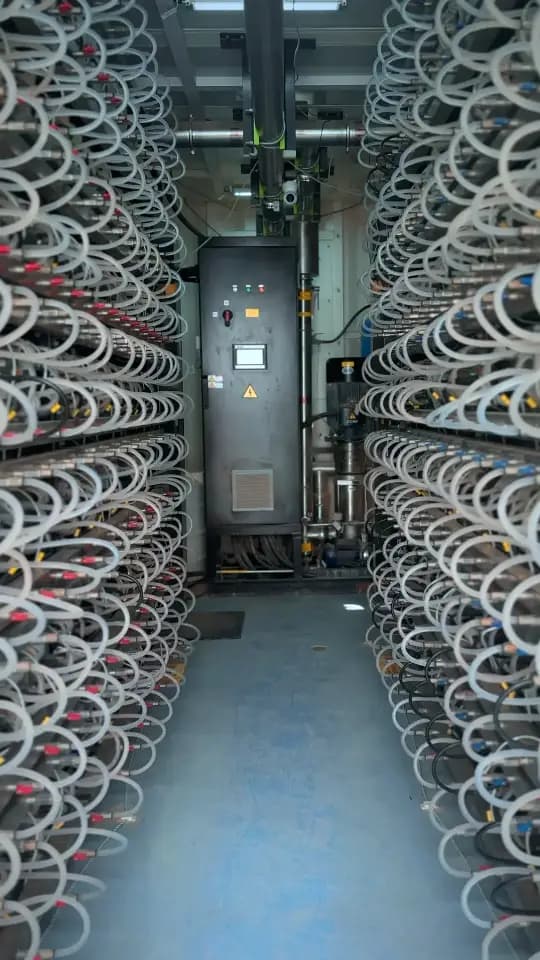
What bitcoin colocation means
Colocation is an old data-centre idea. You place your own equipment in someone else's building and pay for the space, the power and the care it gets. Bitcoin colocation applies the same idea to ASIC miners. The machines are yours. The electricity and cooling come from the facility. The bitcoin your miners earn is paid by the mining pool straight to your own account.
Three models often get mixed up. The table shows how they differ.
| Model | What you own | What you pay for | Where rewards go |
|---|---|---|---|
| Colocation (your miners, hosted) | The ASIC miners | Power used and the hosting service | Your own pool account |
| Buying a hosted miner | A miner bought through the host and placed straight into a rack | The machine, then power used and the hosting service | Your own pool account |
| Cloud mining | No hardware, only a contract for hashrate | The contract | Paid out under the contract terms |
Buying a hosted miner is colocation with the purchase step folded in. You still own a physical machine with a serial number. With cloud mining you never see the hardware, so the checks you need are different. Our guide on whether cloud mining is legit covers those checks.
What you own and what the facility provides
In a fair colocation setup, the line between your side and the facility's side is written down clearly. A typical split looks like this.
Yours
- The miners themselves, including their serial numbers and the right to sell or move them
- The pool account and the wallet address the payouts go to
- The decisions on which pool to use, when to upgrade and when to sell
The facility's
- Electrical supply and power distribution to each rack
- Cooling. That means air halls with intake filters and fan walls, or hydro loops with pumps and dry coolers
- A network link and local setup so each miner can reach its pool
- Racks, physical security and site staff
- Monitoring and first-line work such as reboots, fan or power-supply swaps, and sending faulty hashboards to the repair bench
Read this part of any contract slowly. Check who pays for spare parts, who decides when a miner goes for repair, and how you are told when a machine is offline.
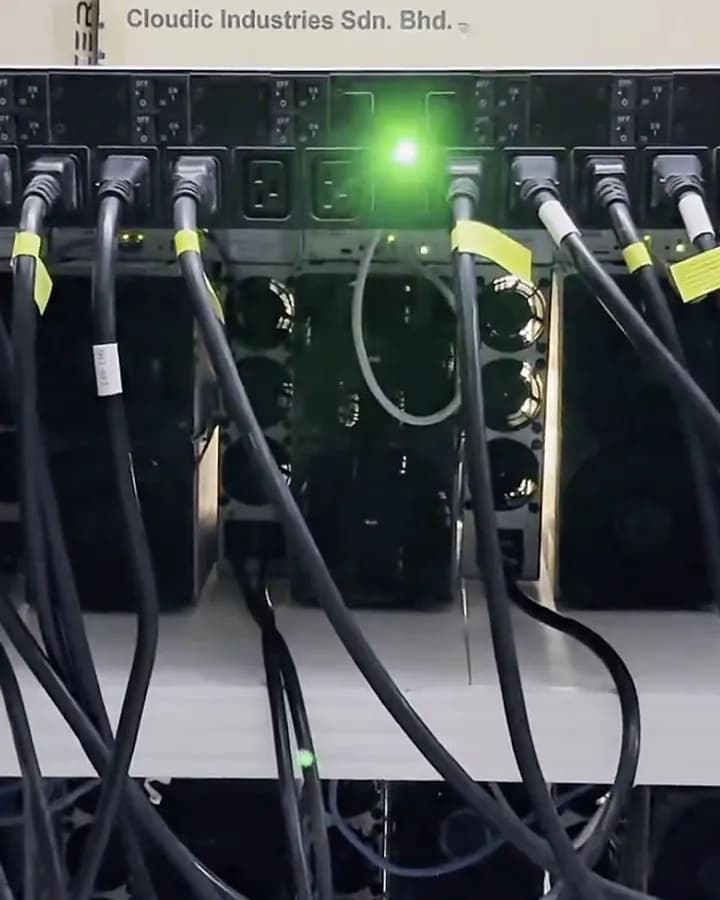
How colocation works, step by step
- Choose your miners. The choice is mainly between air-cooled and hydro-cooled models.
- Agree a plan and a centre with the host. At Segments the hosting plan is called Saver.
- Bring the miners in. Either ship your own units or buy them in the UAE. Plan the shipping and import paperwork with the host before anything leaves.
- Intake. The site logs each serial number, checks the unit and records its condition.
- Setup. Each miner is racked, powered and networked, and its pool settings point at your account.
- Running. You watch hashrate in your pool dashboard, while the site watches temperatures, power draw and faults.
- Billing. You receive a regular bill for the power your miners used and the service around them.
Air or hydro cooling in the UAE
UAE summers are hot, so cooling decides a lot. Air-cooled miners run in halls that pull outside air through filters or wet pads and push it out through walls of exhaust fans. Hydro-cooled miners carry liquid through plates on the hashboards and pass the heat to a dry cooler outside. That keeps them steadier in the heat, but it needs centres built for hydro racks.
Segments' UAE centres include air-cooled halls such as F20 and F54 and hydro-cooled setups such as F39 and F40. Which one suits you depends on your miner model and on space at the time you sign. An air-cooled unit such as the one below fits an air hall.
Antminer S21 (200T)
200 TH · 17.8 J/TH
Today's price
$1,740
See this miner
Monitoring, uptime and repairs
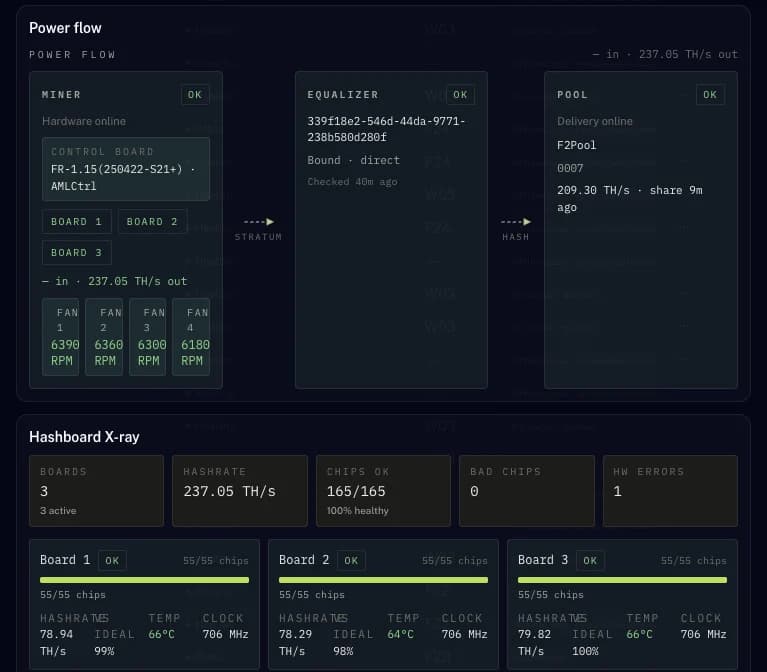
You and the site see different screens. You see hashrate and payouts at the pool. The site staff see each miner's power flow, board temperatures and error logs, and they act when a board drops out or a fan fails.
Hosts usually state an uptime target. Treat it as a target, not a promise, and ask exactly how it is counted. Some hosts count only the facility's own outages. Others count every hour a miner is not hashing. Our explainer on how mining uptime is measured walks through the common methods.
What sets your mining income
The host sets your costs, but the network sets your income. Bitcoin pays new coins to whoever does the proof-of-work. The white paper describes this as "one-CPU-one-vote", where today the vote is cast by ASIC hashrate. Your share depends on your hashrate against the whole network, which shows up in two numbers that move every day.
- Hashprice
- $0.0261 per TH/s a day
- Network difficulty
- 145.1 T
- Bitcoin price
- $60,265
An efficient miner spends less power for each unit of hashrate. That is why buyers compare joules per terahash between models before they choose.
Questions to ask before signing
- Which centre will my miners go to, by code, and is it air or hydro?
- How is power metered, and how is it shown on the bill?
- What does the service fee cover, and what is charged as extra?
- How is uptime measured, and how will I hear about outages?
- Who repairs faulty boards, and who pays for parts?
- Does payout go only to my own pool account and wallet?
- How do I take my miners out if I want to sell or move them?
Questions
- Do I keep ownership of my miners in colocation?
- Yes. In colocation the miners remain your property. The facility provides power, cooling, network and staff, and the pool pays mining rewards to your own account. Check that the contract states ownership and how you can remove your machines.
- Is bitcoin colocation the same as cloud mining?
- No. In colocation you own physical miners with serial numbers. In cloud mining you buy a contract for hashrate and own no hardware, so your rewards depend on the contract terms rather than on machines you control.
- Can I host hydro-cooled miners as well as air-cooled ones?
- Yes, as long as the centre is built for them. Hydro miners need racks connected to a coolant loop, so they go into hydro centres. Air-cooled miners go into halls with filtered intake and exhaust fans. Ask the host which centre code fits your model.
- How do I see whether my miners are working?
- Your pool dashboard shows the hashrate of each worker and your payouts. The hosting site monitors power, temperatures and faults separately, and should tell you when a miner needs repair or is offline.
Sources
- Bitcoin: A Peer-to-Peer Electronic Cash System · bitcoin.org, 2008-10-31