What sets a miner's resale value
An ASIC miner is a machine with one job: hashing for the Bitcoin network. A buyer of a used unit is really buying its future output, less the power it will burn to produce that output. So the market looks at a short list of measurable things rather than brand loyalty or how new the box looks.
- Efficiency (J/TH): how many joules of energy the miner uses for each terahash of work.
- Hashrate (TH/s): how much work it produces in total.
- Model generation: where it sits against the newest chips on the market.
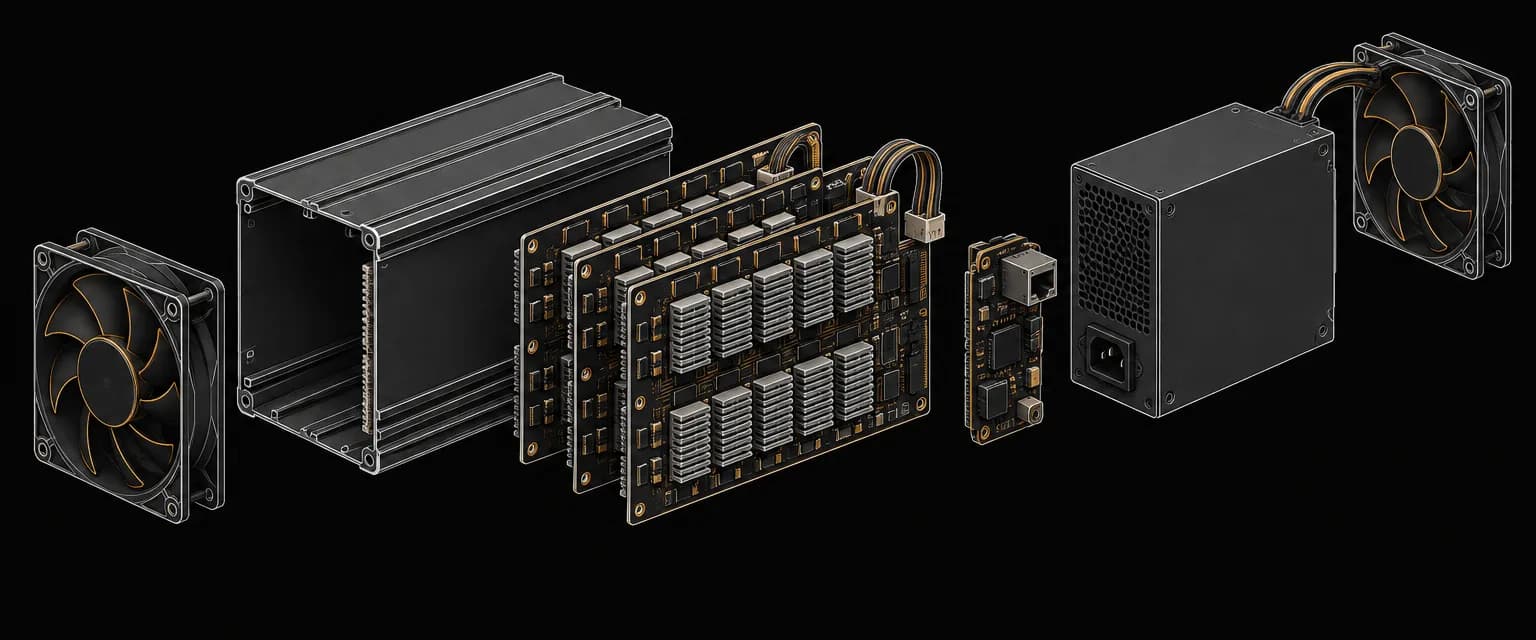
- Condition: whether every hashboard, fan and power supply still works as designed.
- Cooling type: air-cooled or hydro-cooled, which decides where it can be installed.
- Hashprice: what a unit of hashrate earns right now, which moves the whole market up or down.
Efficiency and hashrate
Efficiency is usually the strongest single factor. Researchers who estimate the network's power use model it from the efficiency of the hardware in service, because energy per terahash is what separates one machine from the next. A miner with a lower J/THJ/THJoules per terahash: how much power a machine uses for its work. Lower = cheaper to run.All terms in the glossary figure keeps more of its revenue after the power bill, and it stays useful to buyers for longer as network difficultyDifficultyHow hard it is to mine a block. It rises as more machines join the network.All terms in the glossary rises.
Hashrate matters too, but mostly together with efficiency. Two machines with the same hashrate can be worth quite different amounts if one needs far more power to get there. When you compare listings, divide the rated power by the rated hashrate yourself rather than relying on a seller's summary.
Antminer S21 (200T)
200 TH · 17.8 J/TH
Today's price
$1,740
See this miner
Model generation and condition
Each new chip generation raises the bar for efficiency. Difficulty adjusts roughly every two weeks to keep blocks coming at a steady pace, so as newer, more efficient machines join the network, each older machine earns a smaller share. Older generations do not disappear, but they suit buyers with access to lower-cost power, and that narrower pool of buyers is reflected in what they sell for.
Condition is where two units of the same model can differ the most. A miner running on all of its hashboards, with stable chip temperatures and a clean log, is a different product from one that has been repaired several times or runs with a board missing. For a closer look at typical faults, see our guide to common Antminer repairs.
Hydro versus air cooling
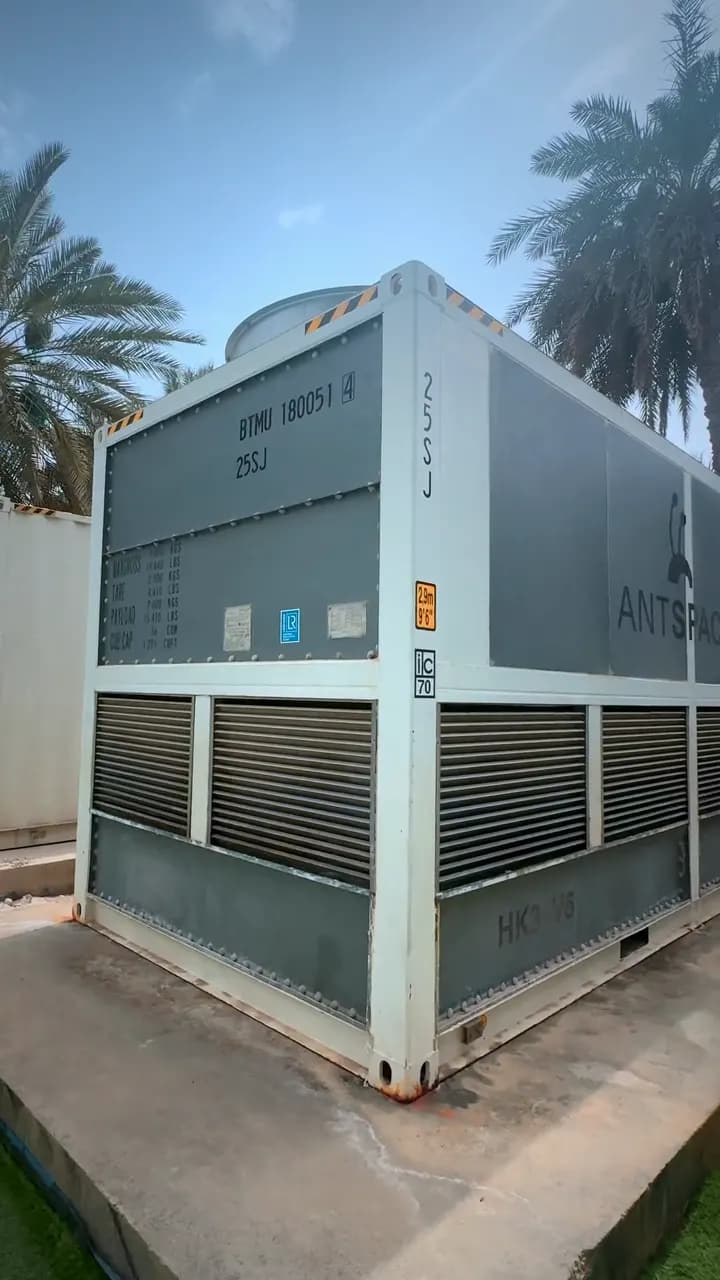
Air-cooled miners fit almost any hosting hall or container with fans and airflow, so they have a wide pool of potential buyers. Hydro-cooled miners pack more hashrate into each unit and often run at better efficiency, but they need a site with water-cooling loops, pumps and dry coolers. That means fewer buyers can install them, even though those buyers tend to be serious operators.
Neither type is simply more valuable. What matters is whether the miner fits the infrastructure the next owner has. Our comparison of hydro, air and immersion cooling goes through the trade-offs in more detail.
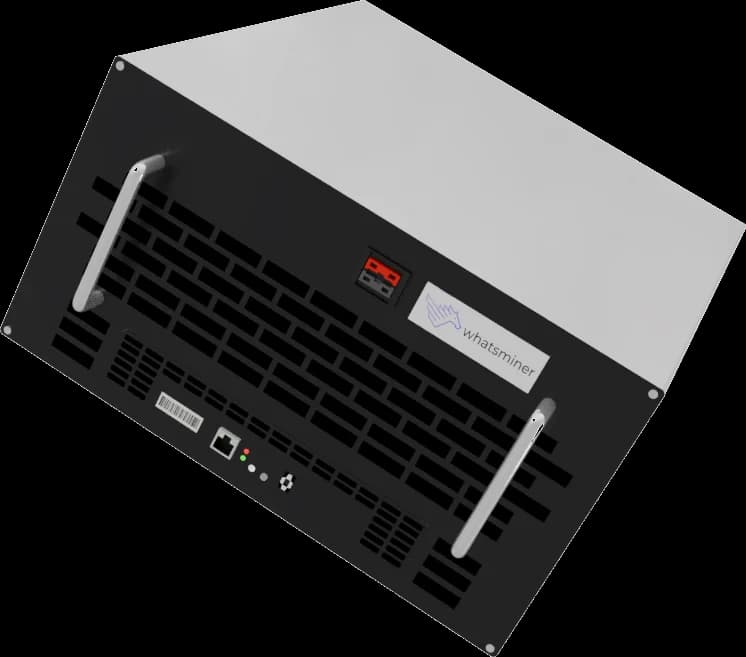
MicroBT WhatsMiner M66s (300 TH)
300 TH · 18.4 J/TH
Today's price
$2,860
See this miner
Hashprice and the wider market
HashpriceHashpriceWhat 1 TH/s of mining earns in a day, before power. Moves with the Bitcoin price.All terms in the glossary is the expected revenue from a unit of hashrate over a day. Hashrate Index, which publishes it, describes it as a way to quantify "how much a miner can expect to earn" from their hashing power. When hashprice rises, more buyers want machines and used prices tend to firm up. When it falls, demand for less efficient units cools first, while efficient models hold interest better.
- Hashprice
- $0.0283 per TH/s a day
- Network difficulty
- 134.8 T
Because hashprice changes constantly, a fair resale value is always a snapshot. Owners can also respond to low hashprice by tuning miners down, which our article on power tuning and curtailment explains.
How to check a used miner's condition
Whether you are buying or preparing to sell, ask to see the miner running, either in person or through its web interface and a live pool dashboard. Then work through these checks:
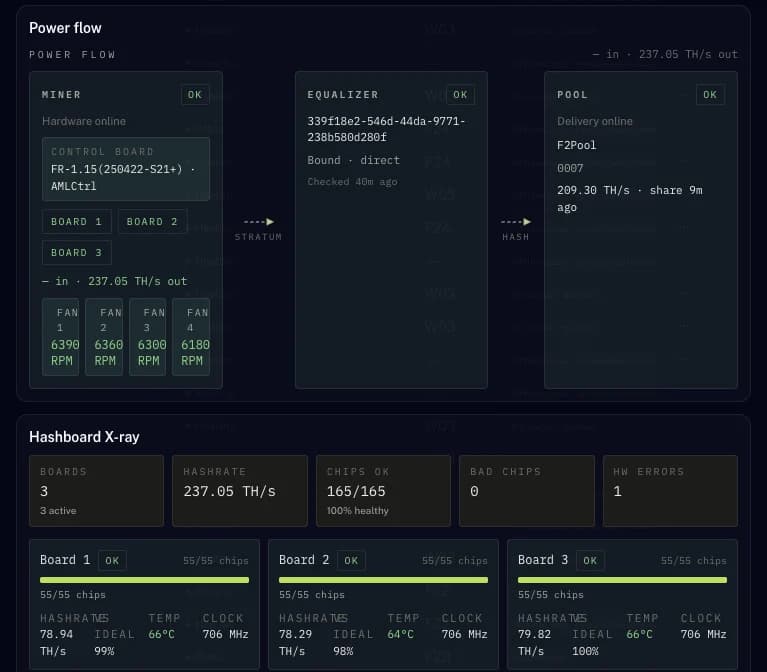
- Hashboards: confirm every board is detected and each reports a hashrate close to the others. A board that hashes well below its neighbours, or one that is missing, is a clear warning.
- Chip temperature: look at chip and board temperatures under load. Even readings across boards are a good sign; one board running much hotter points to cooling or chip problems.
- Error logs: read the kernel log for repeated hardware errors, chip count mismatches, fan faults or power supply warnings.
- Fans and PSU: listen for bearing noise and check that fan speeds are steady. On hydro units, look for signs of leaks or corrosion around the fittings.
- Pool data: compare the hashrate the pool actually credits with the hashrate the miner claims. A large gap suggests rejected shares or unstable boards.
- Repair history: ask whether chips or boards have been replaced, and by whom.
Our guide to buying a used ASIC miner covers seller questions and paperwork as well.
Why a hosted, monitored history helps
A buyer's biggest worry with a used miner is the unknown. A machine that has run in a professional hosting centre comes with a record: hashrate over time, temperatures, restarts, and any repairs carried out on site. That record answers most of the questions in the checklist above before a buyer even asks them.
At Segments, miners run in our UAE hosting centres, including F20 and F54, where operating data is monitored and logged. Uptime is a target we work towards, not a promise, but a clear log of how a miner has performed is something you can show a future buyer. You can read how we report it in how mining uptime is measured.
Questions
- What matters most for a used ASIC miner's resale value?
- Efficiency, measured in joules per terahash, is usually the strongest factor, followed by hashrate, model generation and physical condition. Cooling type and the current hashprice then shape how many buyers are interested at any given time.
- Are hydro-cooled miners worth more than air-cooled ones?
- Not automatically. Hydro miners often deliver more hashrate per unit and good efficiency, but they need a site with water-cooling infrastructure, so fewer buyers can use them. Air-cooled miners suit more sites. Value depends on whether the miner fits the next owner's setup.
- How can I check a used miner before buying it?
- See it running. Confirm every hashboard is detected and hashing at a similar rate, check chip temperatures under load, read the error log for hardware or chip faults, listen to the fans, and compare the hashrate the pool credits with what the miner reports. Ask about any past repairs.
- Does hosting a miner help when I later sell it?
- It can. A hosting centre that monitors and logs hashrate, temperatures and repairs gives you a documented operating history, which helps a buyer trust the machine's condition.
Sources
- Difficulty · Bitcoin Wiki, 2024-01-01
- What is Hashprice? · Hashrate Index (Luxor), 2023-01-01
- Cambridge Bitcoin Electricity Consumption Index: Methodology · Cambridge Centre for Alternative Finance, 2024-01-01